




Founded on the principles of integrity, diligence, transparency, and a client-first approach, Paul’s Advocates & Solicitors (“Firm”) has emerged as a trusted legal advisor. The firm combines courtroom strength with commercial insight, offering comprehensive legal solutions across litigation, corporate law, and advisory services.
With a team of seasoned advocates, we go beyond conventional legal representation, delivering strategic, practical, and results-driven counsel tailored to each client’s unique needs. Whether navigating complex disputes or advising on critical business decisions, we remain committed to protecting our clients’ interests at every stage.
Founded on the principles of integrity, diligence, transparency, and a client-first approach, Paul’s Advocates & Solicitors (“Firm”) has emerged as a trusted legal advisor. The firm combines courtroom strength with commercial insight, offering comprehensive legal solutions across litigation, corporate law, and advisory services.
With a team of seasoned advocates, we go beyond conventional legal representation, delivering strategic, practical, and results-driven counsel tailored to each client’s unique needs. Whether navigating complex disputes or advising on critical business decisions, we remain committed to protecting our clients’ interests at every stage.
From complex disputes to corporate advisory, we are committed to protecting your interests and delivering effective legal solutions.
From complex disputes to corporate advisory, we are committed to protecting your interests and delivering effective legal solutions.
Please feel free to get in touch with us using the contact details below or by filling out the enquiry form. We will make every effort to respond to your query at the earliest.
61- GF, Eros Marketplace, Shakti Khand – II, Indirapuram, Ghaziabad, Uttar Pradesh – 201014
Paul’s Advocates & Solicitors | All Rights Reserved.
Arbitration and Alternative Dispute Resolution (“ADR”) have steadily emerged as the preferred choice for parties seeking a faster, confidential, and commercially sensitive resolution. ADR encompasses a range of processes, including arbitration, mediation, conciliation, and negotiation.
In India, the field is governed by the Arbitration and Conciliation Act, 1996, a legislation that has undergone significant reform through the amendments of 2015 and 2019 to bring it in line with international best practices. Arbitral awards passed under the Act carry binding force and are enforceable as decrees of the court. The grounds for judicial interference are intentionally narrow, confined to the limited exceptions prescribed under Section 34, thereby preserving the finality and sanctity of the arbitral process.
The Micro, Small and Medium Enterprises Development Act, 2006 (“MSME Act”) 2006, where payment dues raised by an MSME supplier remain unresolved, the matter is referred to the Micro and Small Enterprises Facilitation Council (MSEFC), which first attempts conciliation and, upon its failure, proceeds directly to arbitration under the Arbitration and Conciliation Act, 1996, making the two statutes inseparably linked.
Delhi occupies a prominent position in India’s arbitration landscape. The Delhi International Arbitration Centre (“DIAC”) serves as a leading institutional body for administering arbitrations, while the Delhi High Court exercises jurisdiction for appointing arbitrators under Section 11 and overseeing the enforcement of awards under Section 36.
Banking and finance law in India governs the relationship between financial institutions, borrowers, and regulators. The Recovery of Debts and Bankruptcy Act, 1993 (RDBA) (formerly RDDBFI Act) established the Debt Recovery Tribunal (DRT) as a specialised forum for the recovery of debts due to banks and financial institutions. The DRT, Delhi and the Debt Recovery Appellate Tribunal (DRAT), Delhi, handle a significant volume of recovery litigation.
The SARFAESI Act, 2002, empowers secured creditors to enforce their security interests, including taking symbolic or physical possession of assets. Borrowers and guarantors have the right to challenge such actions under the Act.
Non-Performing Assets (“NPAs”) have been a significant concern for India’s banking sector. Legal mechanisms under the RDBA, SARFAESI Act, and the Insolvency and Bankruptcy Code, 2016, collectively provide creditors with multiple avenues for debt recovery and resolution.
The Reserve Bank of India (“RBI”) regulates banks, Non-Banking Financial Companies (NBFCs), and financial transactions, with a robust framework for loan restructuring, one-time settlements (OTS), and account classification norms. Disputes involving letters of credit, bank guarantees, and syndicated loans are adjudicated before civil courts and DRTs, depending on the nature of the claim.
Civil law governs disputes between private individuals and entities, encompassing a broad range of matters including recovery of money, possession of property, specific performance of contracts, injunctions, declarations, and compensation for civil wrongs. Civil proceedings in Delhi are governed by the Civil Procedure Code, 1908 (CPC).
The civil court hierarchy in Delhi includes Civil Judge Courts, Additional District Judge Courts, and the Delhi High Court. The appropriate forum depends on the pecuniary value and nature of the dispute. Limitation periods under the Limitation Act, 1963, are strictly applied and must be considered at the outset.
Interim reliefs such as temporary injunctions under Order 39 CPC, attachment before judgment, and appointment of receivers play a critical role in protecting a party’s rights during the pendency of a suit. Courts apply the well-established triple test, prima facie case, balance of convenience, and irreparable harm before granting such reliefs.
The Commercial Courts Act, 2015, established specialised Commercial Courts in Delhi for resolving disputes of a commercial nature above a specified pecuniary threshold. These courts follow a streamlined procedure, including mandatory pre-institution mediation, aimed at faster disposal of commercial civil disputes.
The incorporation of a business entity in India is governed by the Companies Act, 2013, and the Limited Liability Partnership Act, 2008, administered by the Ministry of Corporate Affairs (MCA) through an online portal. Choosing the right legal structure is foundational to any business venture.
Common business structures include Private Limited Companies, Public Limited Companies, One Person Companies (OPCs), Limited Liability Partnerships (LLPs), and Section 8 Companies (not-for-profit entities). Each structure differs in terms of compliance requirements, liability protection, ownership flexibility, and taxation.
The incorporation process involves name reservation, filing of the requisite forms, submission of the Memorandum of Association (“MoA”) and Articles of Association (“AoA”), and obtaining a Certificate of Incorporation along with a PAN and TAN. Post-incorporation compliances include GST registration, MSME (Udyam) registration, and registration under the Delhi Shops & Establishments Act, 1954.
Foreign companies seeking to establish a presence in India may set up a Liaison Office, Branch Office, or Wholly Owned Subsidiary (WOS), subject to approvals from the Reserve Bank of India (RBI) and compliance with the Foreign Exchange Management Act, 1999 (FEMA) and relevant FDI policy norms.
The Consumer Protection Act, 2019, is the principal legislation safeguarding the rights of consumers in India. It provides for a three-tier quasi-judicial redressal mechanism, the District Consumer Disputes Redressal Commission (“DCDRC”), the State Consumer Disputes Redressal Commission (“SCDRC”), and the National Consumer Disputes Redressal Commission (“NCDRC”), with pecuniary jurisdiction determining the appropriate forum.
Consumers can seek redressal for defective goods, deficiency in services, unfair trade practices, and restrictive trade practices. The Act covers disputes against a wide range of service providers, including builders, banks, insurance companies, hospitals, educational institutions, and e-commerce platforms.
The Central Consumer Protection Authority (CCPA), established under the 2019 Act, has the power to take suo motu cognisance of consumer rights violations and issue guidelines. The Consumer Protection (E-Commerce) Rules, 2020, impose specific obligations on online marketplaces and direct sellers.
Product liability is an important feature of the 2019 Act, making manufacturers, sellers, and service providers liable for harm caused by defective products or deficient services. Mediation has also been introduced as a pre-litigation step to encourage early settlement of consumer disputes.
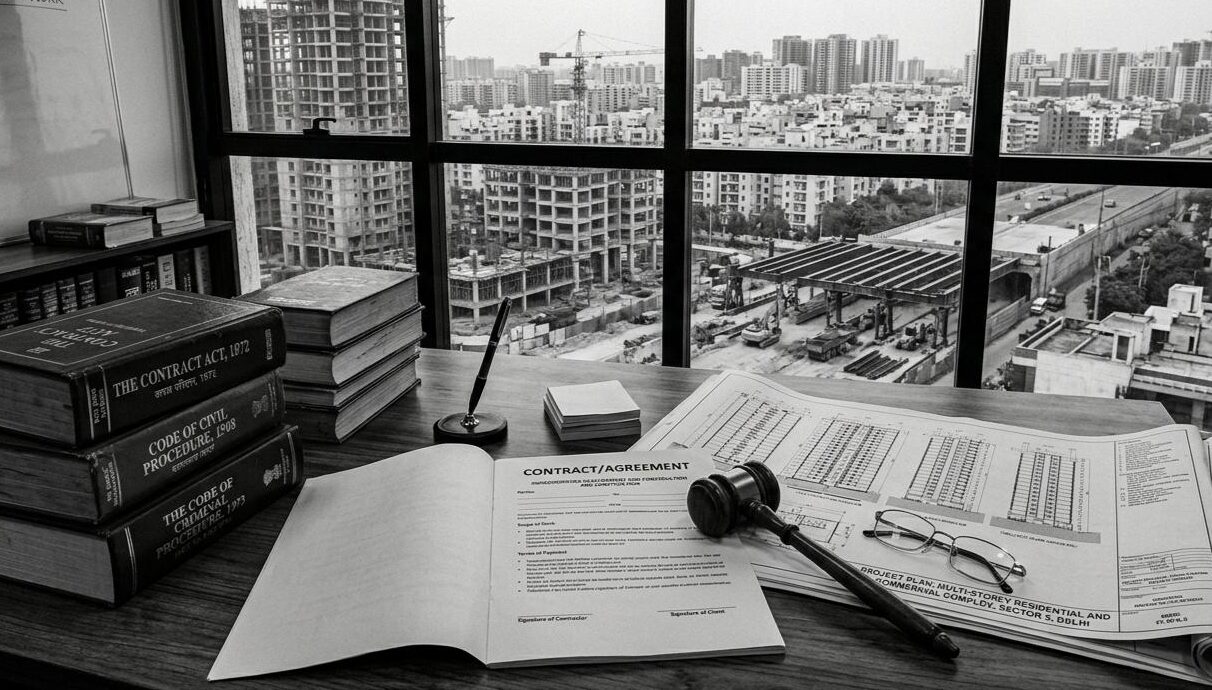
A contract is a legally enforceable agreement between two or more parties, governed in India primarily by the Indian Contract Act, 1872. Valid contracts require offer, acceptance, consideration, free consent, capacity, and a lawful object. Breach of contract entitles the aggrieved party to remedies including damages, specific performance, and injunction.
Commercial agreements span a wide spectrum, including service agreements, procurement contracts, non-disclosure agreements (NDAs), franchise agreements, distribution and dealership agreements, licensing agreements, and technology transfer contracts. Each must be carefully drafted to address the parties’ rights, obligations, dispute resolution mechanisms, and exit provisions.
Key clauses such as limitation of liability, indemnification, force majeure, representations and warranties, and termination rights require precise drafting to ensure enforceability and commercial clarity. The Specific Relief Act, 1963, governs the remedy of specific performance for breach of certain contracts, particularly those involving immovable property or unique goods.
The Commercial Courts Act, 2015, provides an expedited forum for the resolution of commercial disputes above the specified value threshold. Arbitration clauses are commonly incorporated in commercial contracts to provide a private and efficient dispute resolution mechanism outside the court system.
Corporate and commercial litigation encompasses disputes arising in the context of business operations, corporate governance, and commercial transactions. In India, such disputes are adjudicated before civil courts, the Delhi High Court, and specialised forums, including the National Company Law Tribunal (NCLT) and Commercial Courts.
Matters under the Companies Act, 2013 include oppression and mismanagement petitions (Sections 241–242), winding-up proceedings, derivative actions, and disputes related to mergers and amalgamations. The NCLT, New Delhi, serves as the primary forum for company law disputes and insolvency proceedings under the IBC.
Shareholder disputes, breach of fiduciary duty by directors, enforcement of shareholders’ agreements, and corporate fraud are among the most litigated areas of corporate law. Interim reliefs such as injunctions, attachment, and appointment of receivers are commonly sought to preserve the status quo during litigation.
Criminal law in India has undergone a landmark transformation with the enactment of the Bharatiya Nyaya Sanhita, 2023 (BNS), Bharatiya Nagarik Suraksha Sanhita, 2023 (BNSS), and the Bharatiya Sakshya Adhiniyam, 2023 (BSA), replacing the Indian Penal Code, 1860, the Code of Criminal Procedure, 1973, and the Indian Evidence Act, 1872, respectively.
The criminal trial process involves stages from the filing of a charge sheet, framing of charges, examination of witnesses, final arguments, and pronouncement of judgment. Legal representation at each stage is vital to ensure that the rights of the accused are fully protected.
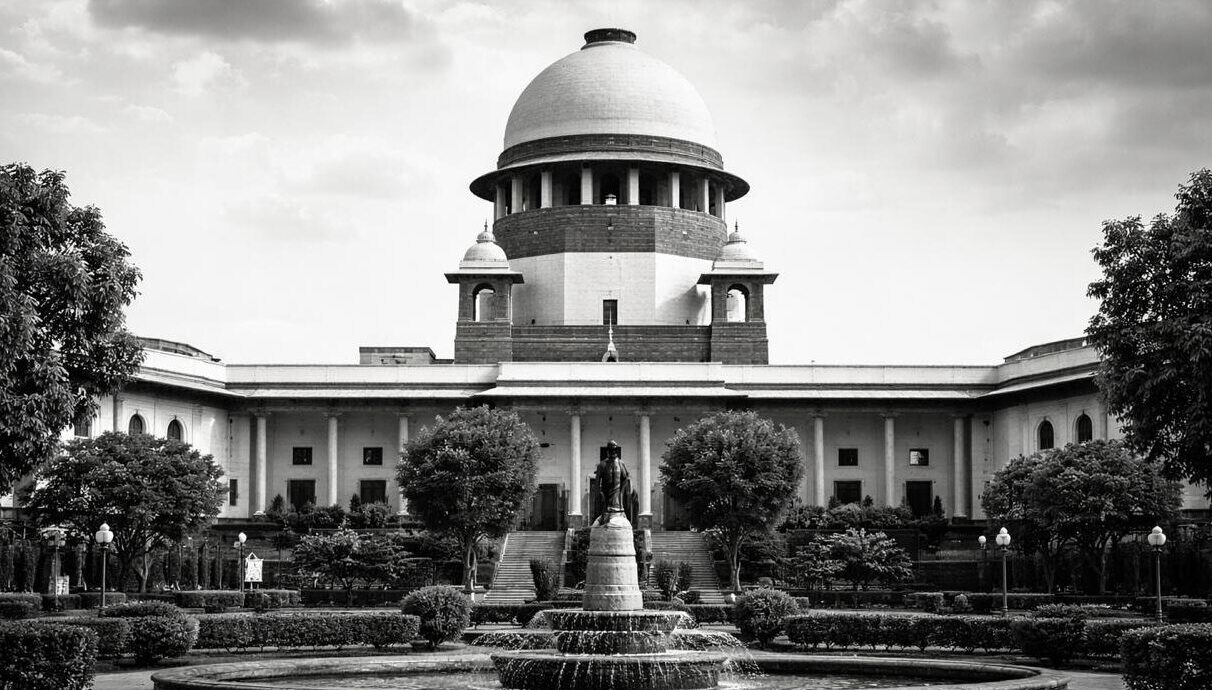
Criminal proceedings in Delhi are conducted before Magistrate Courts, District & Sessions Courts, the Delhi High Court, and ultimately the Supreme Court of India. The right to bail, whether regular bail under Section 483 BNSS, anticipatory bail under Section 484 BNSS, or interim bail, is a crucial facet of personal liberty under Article 21 of the Constitution.
Courts consider factors such as the nature and gravity of the offence, the accused’s criminal antecedents, flight risk, and likelihood of tampering with evidence while deciding bail applications. FIR quashing petitions under Section 528 BNSS (inherent powers) before the Delhi High Court offer an important remedy where criminal proceedings are found to be an abuse of process.
Family and matrimonial law in India is governed by a combination of personal laws and secular statutes, reflecting the country’s religious and cultural diversity. Matrimonial disputes are adjudicated before Family Courts established under the Family Courts Act, 1984, and the Delhi High Court in appellate matters.
Divorce and judicial separation are governed by the Hindu Marriage Act, 1955, for Hindus, the Special Marriage Act, 1954, for civil marriages, the Indian Divorce Act, 1869, for Christians, and the Dissolution of Muslim Marriages Act, 1939, for Muslims. Grounds for divorce vary across personal laws and include cruelty, desertion, adultery, and irretrievable breakdown.
Child custody and guardianship matters are decided in accordance with the Guardians and Wards Act, 1890, with the paramount consideration being the best interests of the child. Indian courts also address international custody disputes and parental child abduction, with increasing reference to international norms.
Maintenance and alimony are governed by Section 144 of the BNSS (formerly Section 125 CrPC), the Hindu Adoption and Maintenance Act, 1956, and relevant personal laws. The Protection of Women from Domestic Violence Act, 2005, provides civil remedies, including protection orders, residence orders, and monetary relief to women facing domestic abuse.
Labour and employment law in India is a complex body of legislation aimed at balancing the interests of employers and employees. Key statutes include the Industrial Disputes Act, 1947, the Factories Act, 1948, the Minimum Wages Act, 1948, the Employees’ Provident Funds and Miscellaneous Provisions Act, 1952, and the Shops & Establishments Act, Delhi, 1954.
India has undertaken significant labour law reform through the consolidation of over 29 central statutes into four Labour Codes: The Code on Wages, 2019; the Industrial Relations Code, 2020; the Code on Social Security, 2020; and the Occupational Safety, Health and Working Conditions Code, 2020.
Employment disputes, including wrongful termination, retrenchment without compensation, and denial of gratuity, are adjudicated before Labour Courts and Industrial Tribunals. The Employees’ Provident Fund Organisation (“EPFO”) and the Employees’ State Insurance Corporation (“ESIC”) oversee social security compliance.
The Sexual Harassment of Women at Workplace (Prevention, Prohibition and Redressal) Act, 2013 (“POSH Act”) mandates every organisation with ten or more employees to constitute an Internal Complaints Committee (ICC). Non-compliance attracts penalties and cancellation of business licences under the Act.
The Bar Council of India does not permit advertisement or solicitation by the advocates. This website belongs to Paul’s Advocates & Solicitors (“the Firm”) and is maintained purely to share general information about its practice. Nothing on these pages constitutes legal advice, a formal legal opinion, or an invitation to establish an advocate-client relationship. The Firm accepts no responsibility for any outcome arising from decisions made on the basis of content found here.
The information provided is believed to be accurate at the time of publication but may not reflect the most current legal developments. The Firm makes no guarantee as to its completeness or reliability. Links to third-party websites, where provided, do not amount to an endorsement or affiliation of any kind, and the Firm bears no responsibility for their content.
By clicking “I Accept” and proceeding to this website, you confirm that: